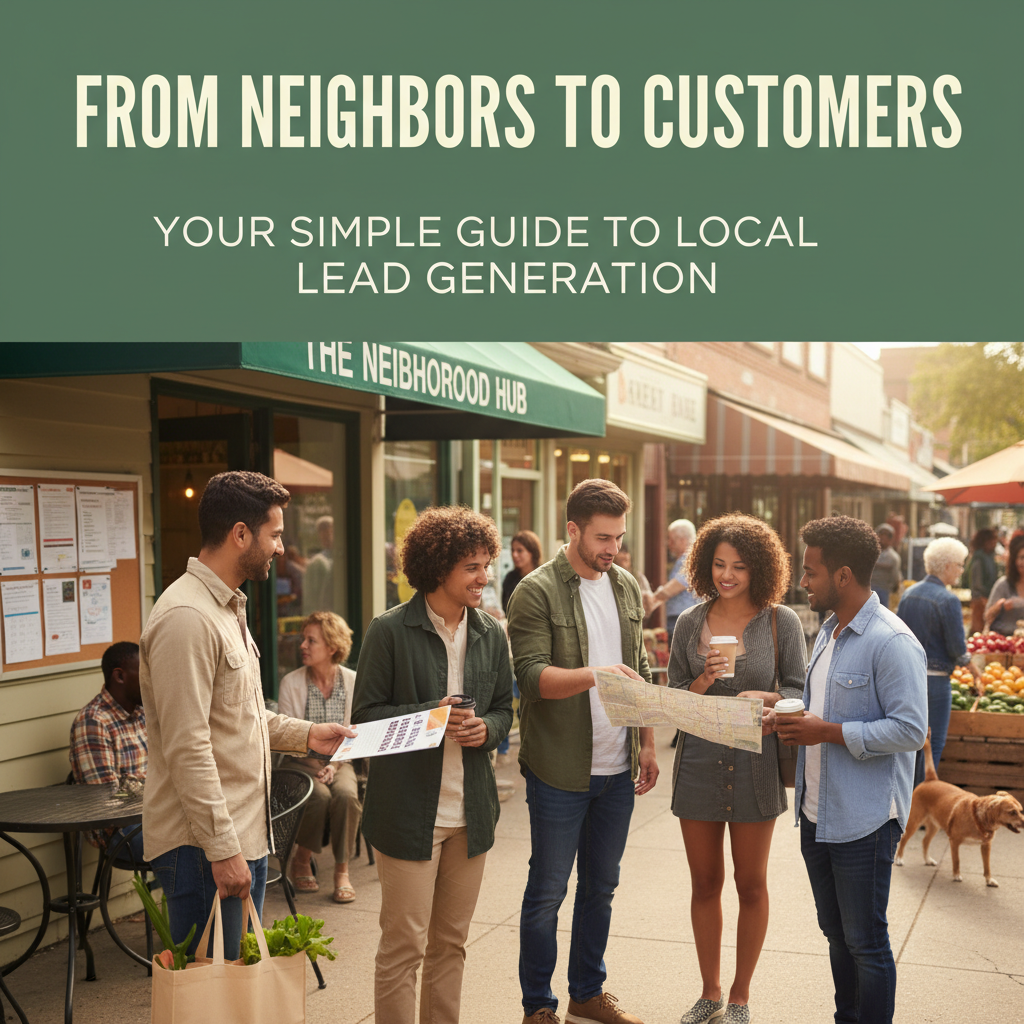
Imagine you've just opened a cozy new coffee shop on Main Street. The coffee smells amazing, the pastries are fresh, but… where are all the customers? You need people to know you exist, to walk through your doors, and ideally, to become regulars. This is where "lead generation" comes in. It's not some fancy, complicated business term; it's simply how you find and attract potential customers.
For local businesses like yours, attracting people from your own community is key. You don't need to reach millions; you need to reach the hundreds or thousands of people who live, work, and play right around your business. In this guide, we'll break down lead generation into easy, actionable steps, perfect for any local business owner.
What Exactly is a Lead?
Think of a "lead" as a person who has shown some interest in what you offer. They're not just a random person; they've raised their hand, even a tiny bit, to say, "Hey, I might be interested!"
- Maybe they visited your website.
- Perhaps they liked your post on social media.
- Or they picked up your flyer at a community event.
They haven't bought anything yet, but they've taken a step that suggests they could become a customer. Your job is to gently guide them from being "interested" to becoming a "paying customer."
Why Lead Generation is Your Local Business's Best Friend
Without leads, your business can't grow. It's like having a fantastic restaurant with no one knowing it exists. For local businesses, lead generation is even more critical because you're competing for a specific group of people – your neighbors.
Here's why it matters:
- Steady Flow of Customers: It keeps new people discovering your business.
- Growth: More leads often mean more sales and bigger profits.
- Community Connection: It helps you build relationships within your local area.
- Beating the Competition: If you're actively seeking customers, you'll stand out.
Online Strategies to Bring Locals to Your Door (Virtually First!)
In today's world, many people look online first, even for local services. Making sure your business is visible and appealing online is a huge part of attracting new local customers.
1. Google My Business: Your Free Digital Storefront
This is arguably the most important online tool for local businesses. When someone searches "pizza near me" or "hair salon [your city name]," Google My Business (GMB) listings often appear at the top.
How to use it:
- Claim and Verify Your Listing: This is step one. It's free!
- Fill Out Everything: Include your exact address, phone number, website, hours of operation, photos of your business, products, and services. The more complete, the better.
- Post Regularly: Treat it like a mini-social media feed. Share updates, offers, new products, or events.
- Get Reviews: Encourage happy customers to leave reviews (more on this below!).
Example: A local bakery posts daily photos of their fresh bread and pastries, updates their holiday hours, and responds to every customer review. This makes their GMB profile look lively and trustworthy.
2. Local SEO: Get Found When People Search Nearby
SEO stands for "Search Engine Optimization," and "Local SEO" is all about making sure your website shows up when people in your area search for businesses like yours.
How to use it:
- Keywords: Use words and phrases local people would search for, like "plumber in Springfield, IL" or "best coffee shop downtown." Include these on your website's pages.
- Website Content: Have pages that talk about your services, your location, and even local events. This tells search engines you're relevant to the area.
- Consistent Information: Make sure your business name, address, and phone number (NAP) are exactly the same across your website, GMB, and any other online directories.
Example: A dog groomer in "Maplewood" might have a page on their website titled "Dog Grooming Services in Maplewood" and mention local parks where their clients walk their dogs.
3. Social Media: Connect with Your Community Online
Facebook, Instagram, and even TikTok can be powerful tools for local lead generation. It's about being social and engaging with your local community.
How to use it:
- Join Local Groups: Participate in local community Facebook groups. Share helpful tips (without being overly salesy) and let people know what you do.
- Run Local Contests: "Like and share to win a free [your product/service]!" Target these contests to people in your geographical area.
- Show Your Local Side: Post pictures of your business, your team, and even local landmarks. Use local hashtags (e.g., #YourTownEats, #ShopLocal[YourCity]).
- Location-Based Ads: Facebook and Instagram allow you to target ads very specifically to people within a certain radius of your business.
Example: A boutique clothing store posts photos of local influencers wearing their outfits at popular spots around town, tagging the locations and encouraging people to "shop the look locally."
4. Online Reviews: Your Digital Word-of-Mouth
People trust reviews. A lot. Good reviews are like dozens of tiny salespeople constantly praising your business. They build trust and encourage new customers to choose you.
How to use it:
- Ask for Reviews: Don't be shy! Politely ask happy customers to leave a review on Google, Yelp, or your Facebook page. You can send a follow-up email, put a sign in your shop, or even mention it at checkout.
- Make it Easy: Provide direct links to your review pages.
- Respond to All Reviews: Thank customers for positive reviews and politely address any negative ones. Showing you care about feedback is important.
Example: A local mechanic sends a text message after service with a link asking, "How was your experience? Please consider leaving us a Google review!"
Offline Strategies: Good Old-Fashioned Community Building
Even with all the online tools, traditional methods of connecting with people in your community are still incredibly powerful for local businesses.
1. Networking: Meet Your Neighbors and Fellow Businesses
Getting out and meeting people face-to-face can lead to valuable connections and referrals.
How to use it:
- Join Local Business Groups: Chambers of Commerce, BNI groups, or local merchant associations are great places to meet other business owners. They might refer customers to you, and you can refer to them.
- Attend Local Events: Go to town festivals, craft fairs, or community gatherings. Just being visible and approachable can generate leads.
- Collaborate: Partner with a complementary local business. A flower shop and a wedding planner could refer clients to each other.
Example: A new massage therapist joins the local Chamber of Commerce, attends their monthly mixers, and exchanges business cards with a chiropractor who starts referring clients.
2. Community Involvement: Be a Local Hero
When you support your community, your community supports you back. This builds goodwill and awareness for your business.
How to use it:
- Sponsor Local Teams/Events: Sponsor a local youth sports team, a school fundraiser, or a community park event. Your business name gets seen, and you're seen as a good neighbor.
- Host Workshops/Classes: If you run a craft store, host a knitting class. If you own a pet store, host a free pet-care seminar. This brings people into your business.
- Participate in Charity Drives: Collect food for a local food bank or toys for a holiday drive. It shows your business cares.
Example: A local hardware store sponsors the high school football team, and their banner is displayed prominently at every game. Parents and coaches remember the store when they need supplies.
3. Referral Programs: Let Your Happy Customers Do the Talking
The best leads often come from happy customers. When someone loves your product or service, they're likely to tell their friends and family.
How to use it:
- Ask for Referrals: Simply ask, "If you know anyone else who could benefit from our services, please send them our way!"
- Offer Incentives: "Refer a friend and both of you get 10% off your next purchase!" This gives people a reason to spread the word.
- Provide 'Shareable' Content: Give customers business cards or small flyers they can easily hand to a friend.
Example: A personal trainer offers their existing clients a free session for every new client they refer who signs up for a package.
Bringing It All Together: The Power of Both Worlds
The most successful local businesses often use a mix of both online and offline strategies. Think of them as different roads all leading to your front door.
Your online presence (GMB, local SEO, social media) helps people find you when they're actively searching or casually browsing. Your offline efforts (networking, community events, referrals) build deeper relationships and trust in your local area.
By combining these, you create a strong, consistent message that reaches your potential customers wherever they are – whether they're scrolling on their phone or attending a local street fair.
Conclusion: Start Small, Think Big
Lead generation for a local business doesn't have to be overwhelming. You don't need to do everything at once. Pick one or two strategies that feel manageable and start there. Get your Google My Business profile perfect. Ask for reviews. Go to a local networking event.
Every small step you take to reach out to your community, both online and offline, is a step towards attracting more loyal customers and growing your local business. Remember, your best customers are often just around the corner, waiting for you to connect with them.
Frequently Asked Questions About Local Lead Generation
-
What's the difference between a "lead" and a "customer"?
A "lead" is someone who has shown initial interest in your business but hasn't purchased yet. They're a potential customer. A "customer" is someone who has completed a transaction and bought something from you.
-
Do I need a big marketing budget for local lead generation?
No, not necessarily! Many effective local lead generation strategies, like optimizing your Google My Business profile, joining local community groups, or asking for referrals, are free or very low-cost. You can start small and invest more as your business grows.
-
How long does it take to see results from lead generation efforts?
It varies depending on the strategy. Some tactics, like running a local social media contest, might show quick results. Others, like building a strong online review profile or improving your local SEO, can take a few weeks or even months to build momentum. Consistency is key!
-
Should I focus more on online or offline strategies?
The best approach for most local businesses is to blend both. Online strategies offer reach and convenience, while offline methods build deep community trust and relationships. Consider what works best for your specific business and target audience, but aim for a mix.
-
How do I know if my lead generation efforts are working?
You can track several things: website visitors from local searches, calls from your Google My Business listing, new followers on social media, new email sign-ups, customer testimonials, and most importantly, an increase in new customers and sales. Keep an eye on these numbers to see what's effective!